

Group wells according to the question and the responsibility behind it. Pumper, lease, field and operating group views can reveal different patterns in the same underlying record.
A well by well list is useful for investigating an asset. A grouped view is useful when a team needs to understand a shared operating condition or responsibility. Neither replaces the other.
Choose the grouping deliberately
Use a field view to examine the broader operating area. Use a lease or property view when the reporting question follows that asset structure. Use a pumper view when the review concerns the assigned operating population.
The group label should not become an explanation. A higher cost in one pumper group does not establish that the pumper caused it. The wells, work and source definitions still need review.
Check membership before comparing periods
Confirm which properties belong to the group and whether assignments changed. A well moving between groups can change both totals without any change in its own operations.
In a fictional comparison, ten wells become twelve after an assignment change. A higher total volume might reflect the added population rather than improved performance. Show the group as currently managed and the continuing population comparison where both are needed.
Use filters inside the grouping
The demonstrated Upstream+ Well Summary lets users select grouping and apply relevant filters. Use that combination to keep a review focused: the grouping organizes the question, and the filters define the included scope.
Record the period, product unit and population. A gas volume comparison should not silently become a mixed product or financial comparison because another view uses the same group name.
Follow the pattern back to wells
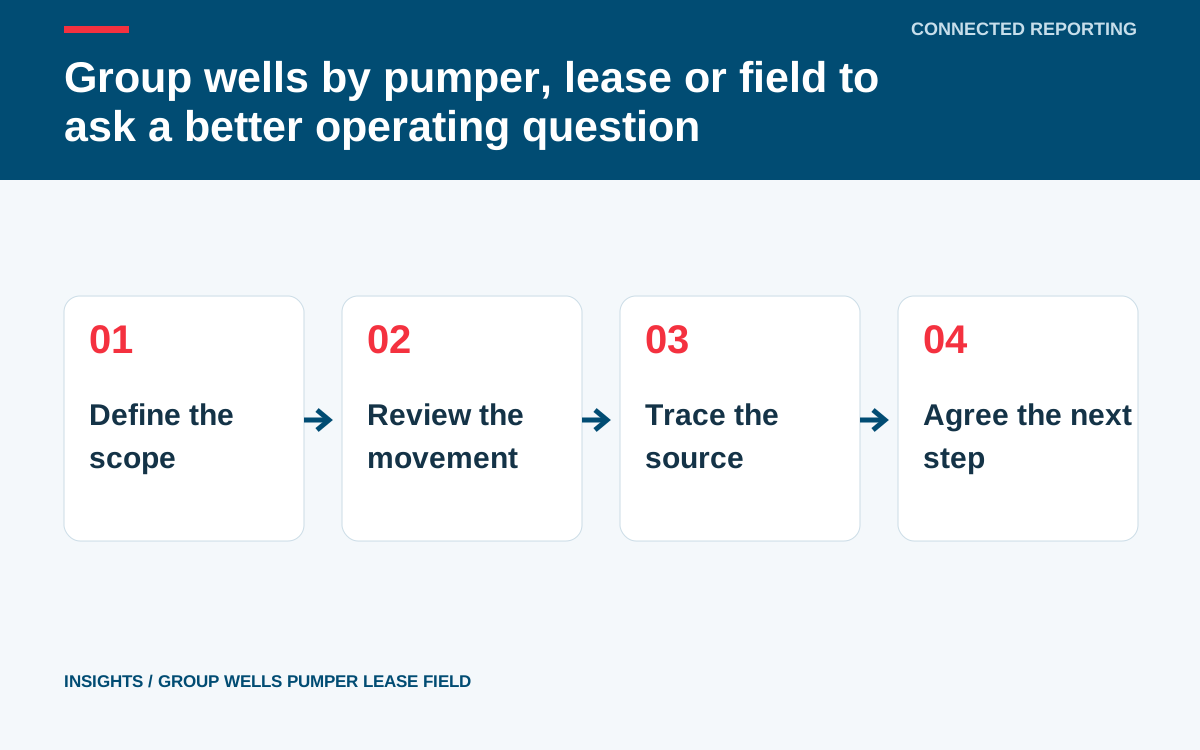
Locate the properties driving the group movement. Ask whether the effect is broad or concentrated. A group total can remain stable while one well deteriorates and another offsets it.
The practical output is a short list of property questions with an operating owner. Keep the group definition available so the next review can reproduce the comparison.
Grouping becomes valuable when it shortens the path from the portfolio to the person who can explain the work.
Research and references
These sources offer background for the review question. The worked examples and review methods above are Upstream’s practical guidance.
- EIA-914 Production Report MethodologyU.S. Energy Information Administration · Authoritative government methodology
Industry context for production definitions and estimation methods.
- A review of dashboards in performance management: Implications for design and researchYigitbasioglu & Velcu · International Journal of Accounting Information Systems · 2012 · Peer-reviewed literature review
Research perspective on dashboard design and drill-down.
Common questions
Which grouping should I choose?
Use the grouping that matches the operating question and responsibility: pumper, lease, field or operating group.
Can a group trend change because wells were reassigned?
Yes. Review group membership and effective dates before attributing the movement to performance.
Put the question to work
Explore the connected workflow for well economics or bring your well data question to a working session.