
Upstream insights
Oil & gas analysis insights.
Practical education for CEOs, CFOs, COOs, finance teams and engineers. Learn how to review lease operating statements, well economics, AFE budgets and analysis transitions.

LOS & LOE · Oct 22, 2026
one-time repair or recurring cost drift? Build the expense timeline
Use an expense timeline to distinguish a one-time repair, repeated interventions and a recurring service rate change before choosing an operating response.
Read the article ↗
Reporting Practice · Oct 8, 2026
Your quarter-over-quarter comparison needs a population bridge
Separate acquisitions, dispositions and coverage changes from continuing asset performance when comparing operating results across quarters.
Read the article ↗
Leadership · Sep 28, 2026
Evaluate SaaS based tool by the outcome you need to produce
Evaluate an oil and gas reporting platform with one complete operating question, real source requirements and role-specific acceptance criteria.
Read the article ↗
Data Continuity · Sep 14, 2026
Changing source systems without restarting every historical comparison
Keep reporting comparable through a source-system change with preserved exports, documented mappings, overlapping acceptance periods and visible exceptions.
Read the article ↗
Reporting Practice · Sep 7, 2026
Summary to detail: what a trustworthy drill down should preserve
A drill down should preserve property scope, dates, basis and measure definitions so the detail explains the number that prompted the investigation.
Read the article ↗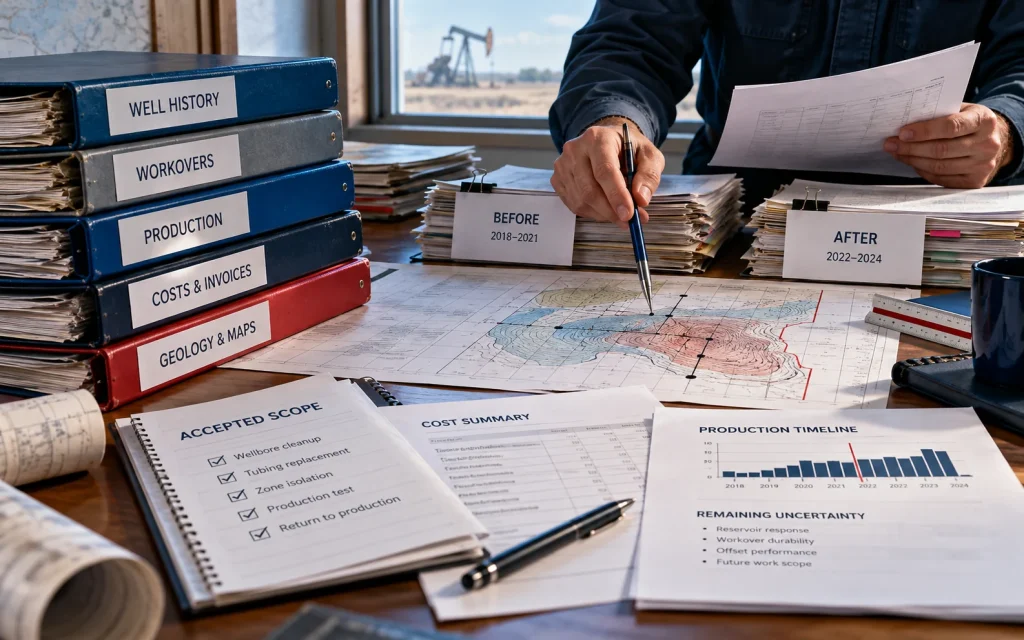
Budgets & AFE · Aug 31, 2026
Review a workover with a before-and-after record, not a victory lap
Assess a workover with its accepted scope, cost, production timeline and remaining uncertainty. A rebound alone does not establish the full result.
Read the article ↗
Well Economics · Aug 24, 2026
Group wells by pumper, lease or field to ask a better operating question
Choose a well grouping that matches the operating responsibility, then confirm membership and effective dates before interpreting group trends.
Read the article ↗
Reporting Practice · Aug 17, 2026
Teach the reporting question before teaching the software clicks
Build practical reporting training around a real operating question, accepted definitions and a repeatable investigation, not a tour of every feature.
Read the article ↗
Leadership · Aug 10, 2026
A 30 minute operating review that ends with owners and actions
Structure a short operating review around accepted scope, material exceptions, evidence and assigned actions rather than reading every report line.
Read the article ↗
Reporting Practice · Aug 3, 2026
When a spreadsheet stops being a useful reporting process
Recognize when recurring spreadsheet reconstruction creates reporting risk, and define a focused transition without discarding useful analysis.
Read the article ↗
Reporting Practice · Jul 27, 2026
Saved views are reporting definitions, not just convenience buttons
Make saved reporting views reproducible by naming their scope, basis, filters and intended question. Review snapshots and definitions separately.
Read the article ↗
Reporting Practice · Jul 20, 2026
Blank, zero and missing: three different reporting states
Distinguish a measured zero from an unavailable record or missing period. Prevent empty months from becoming misleading trends and dashboard comparisons.
Read the article ↗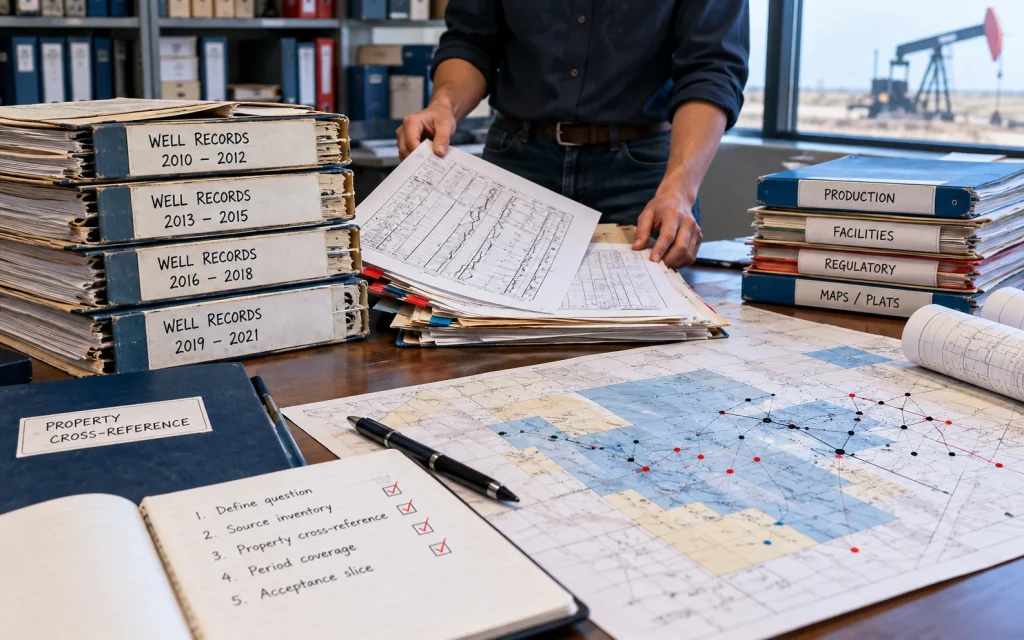
Reporting Practice · Jul 13, 2026
What to prepare before your first oil and gas reporting import
Prepare a first reporting import with a defined question, source inventory, property cross reference, period coverage and a practical acceptance slice.
Read the article ↗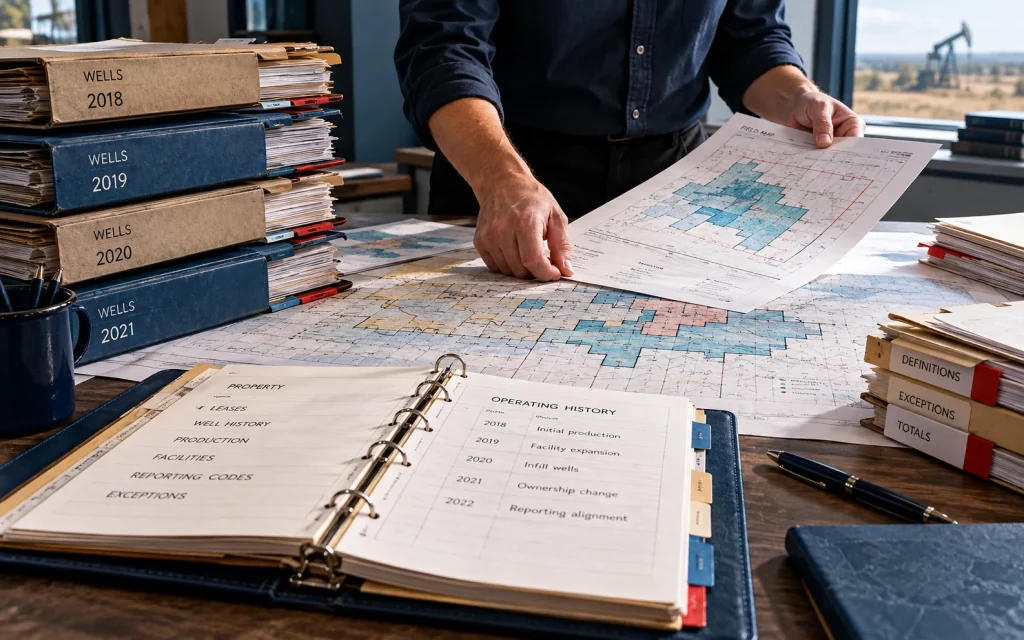
Data Continuity · Jul 6, 2026
Account mapping: how consistent labels can still produce inconsistent reporting
Map source accounts into a consistent reporting structure without losing their meaning. Review definitions, exceptions and totals before accepting a new LOS.
Read the article ↗
Data Continuity · Jun 29, 2026
An acquisition should change ownership, not erase operating history
Preserve the history needed for comparable operating reviews through an acquisition: source periods, property identities, mappings and acceptance checks.
Read the article ↗
Leadership · Jun 22, 2026
Engineers and finance need the same well, not the same screen
Connect engineering and finance around the same property and periods while giving each role the detail needed to investigate its own question.
Read the article ↗
Leadership · Jun 15, 2026
Five questions owners should ask before accepting a portfolio summary
Use five reporting questions to test a portfolio summary: scope, basis, material movement, evidence and the next decision.
Read the article ↗
Leadership · Jun 8, 2026
What a COO needs before the next field meeting
Prepare a field meeting with a short exception list, matched production and cost context, and clear owners for the next operating questions.
Read the article ↗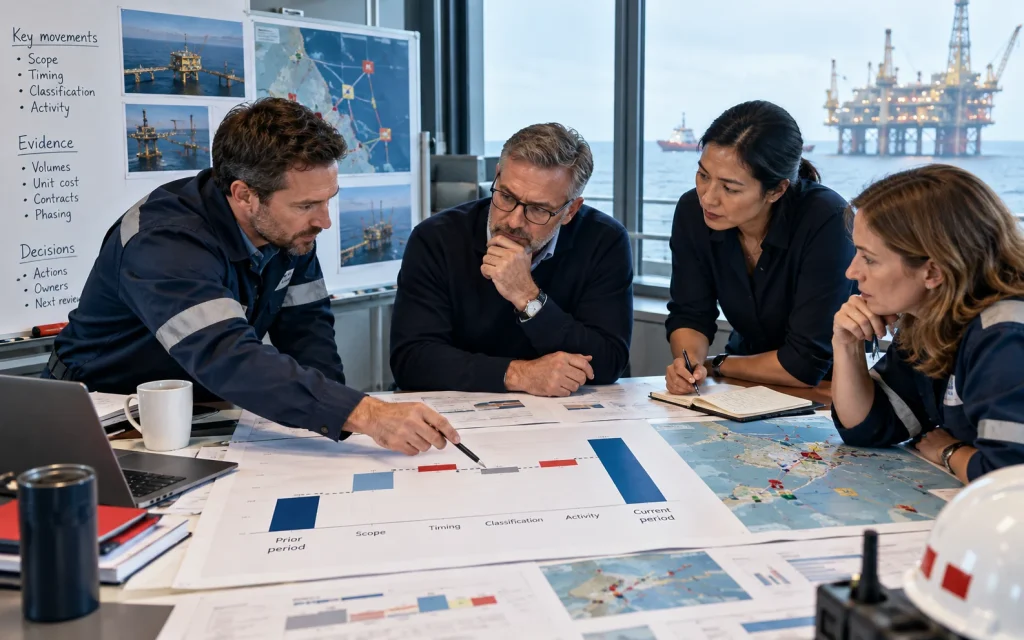
Leadership · Jun 1, 2026
Give the CFO a variance bridge, not another unexplained total
Explain financial movements with a variance bridge that separates scope, timing, classification and activity, with evidence for every material step.
Read the article ↗
Leadership · May 25, 2026
Build a CEO operating review around three decisions
Design a CEO review around material change, execution against plan and the decisions requiring leadership attention, not a wall of reporting widgets.
Read the article ↗
Reporting Practice · May 18, 2026
Gross and net reporting: agree on ownership before comparing wells
Gross and ownership adjusted views answer different questions. Establish working interest and revenue definitions before comparing production or cost.
Read the article ↗
LOS & LOE · May 11, 2026
Cash month and activity month: two dates that change the story
Understand how cash and activity periods can produce different monthly stories, and build a reporting bridge instead of mixing the two bases.
Read the article ↗
Budgets & AFE · May 4, 2026
budget-versus-actual: turn an AFE variance into a useful question
A practical AFE variance review that separates scope, timing, cost category and remaining work before choosing the next action.
Read the article ↗
Well Economics · Apr 27, 2026
A well ranking is a starting point, not a diagnosis
Rank wells to find the next question, then check production, expense, scope and field context before labeling an asset a poor performer.
Read the article ↗
Well Economics · Apr 20, 2026
Why cost per BOE can rise when spending stays flat
Cost per BOE can increase because production falls. Learn how to separate numerator and denominator effects before blaming operating spend.
Read the article ↗
LOS & LOE · Apr 13, 2026
LOE is rising. Is the cost changing, or the comparison?
Before explaining higher LOE, check the same wells, periods, ownership basis and account mapping. Use a simple comparison test to find the actual driver.
Read the article ↗
LOS & LOE · Apr 6, 2026
How to read a lease operating statement without losing the operating story
A practical LOS reading sequence: confirm scope, separate revenue and cost movements, then follow the detail before deciding what needs attention.
Read the article ↗No matching articles. Try another term or ask the Upstream team.